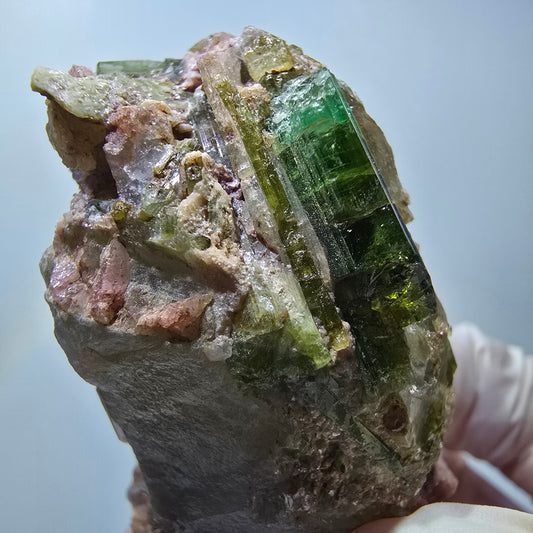
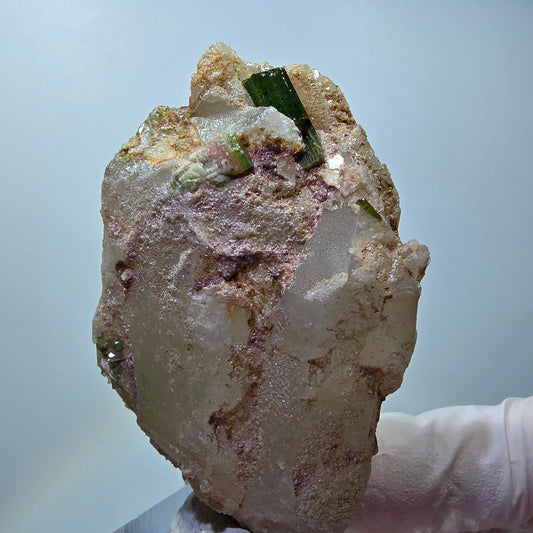
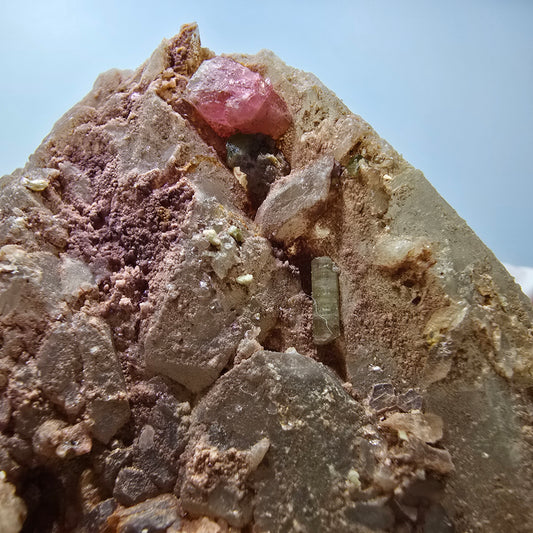
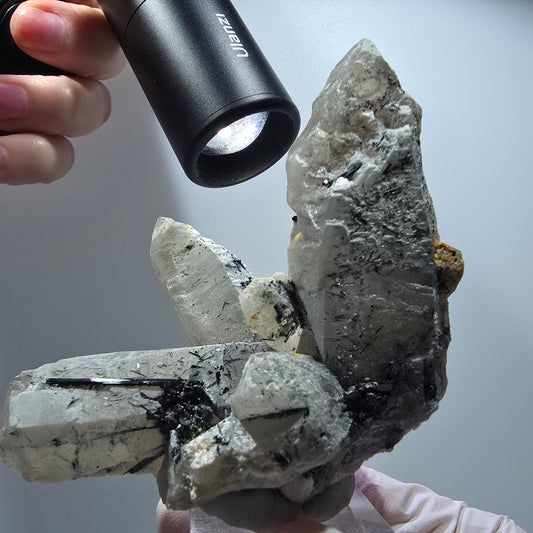
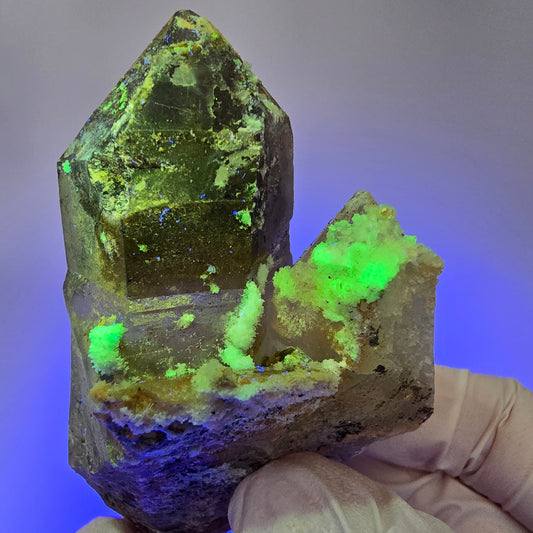
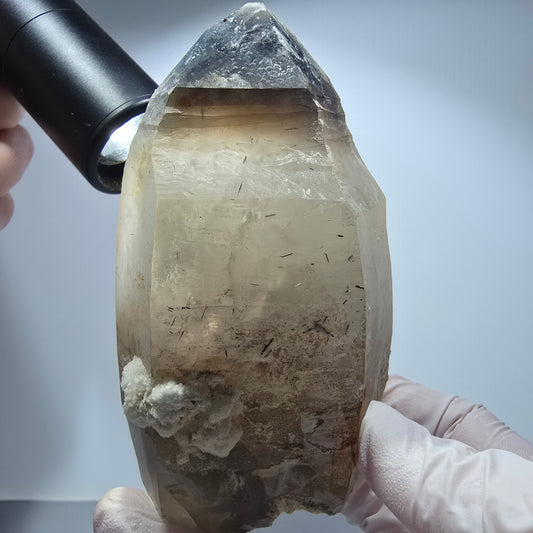
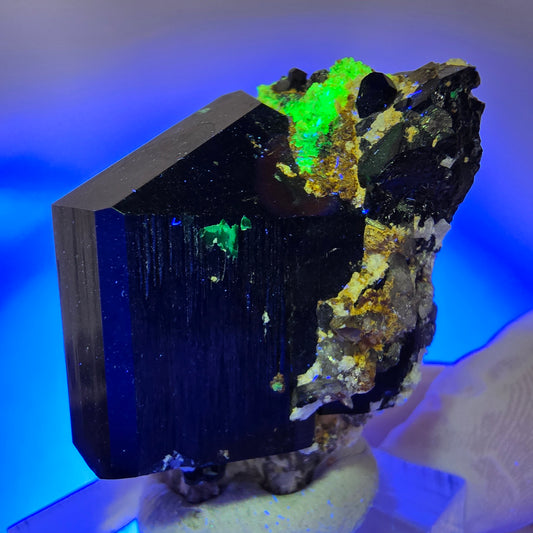
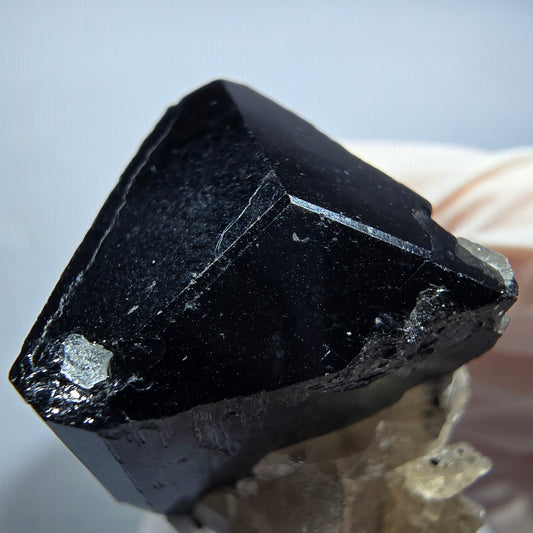
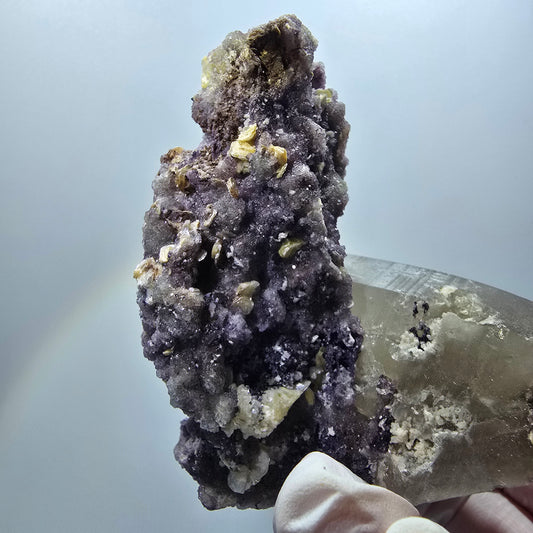
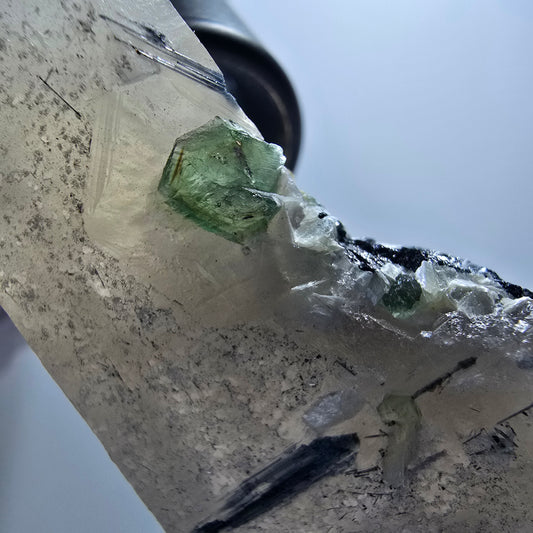
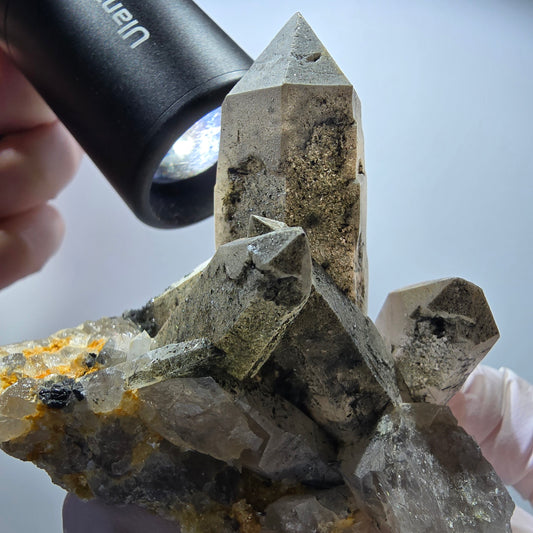
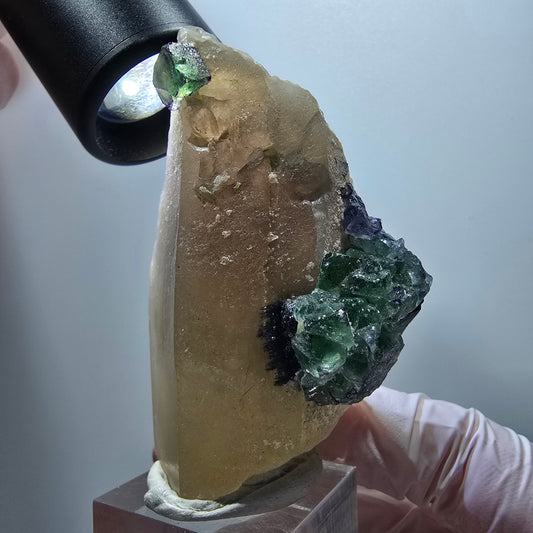
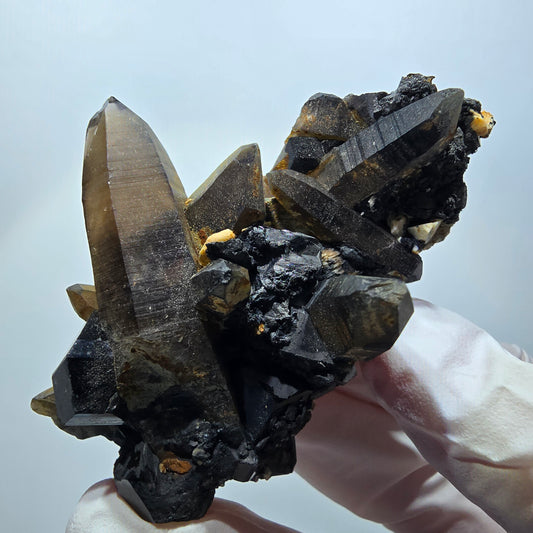
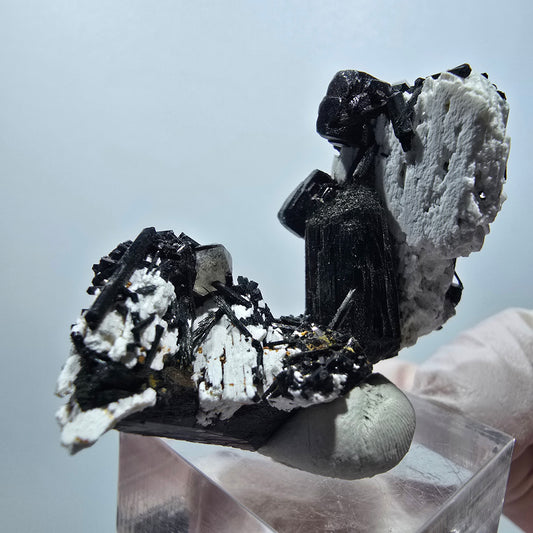
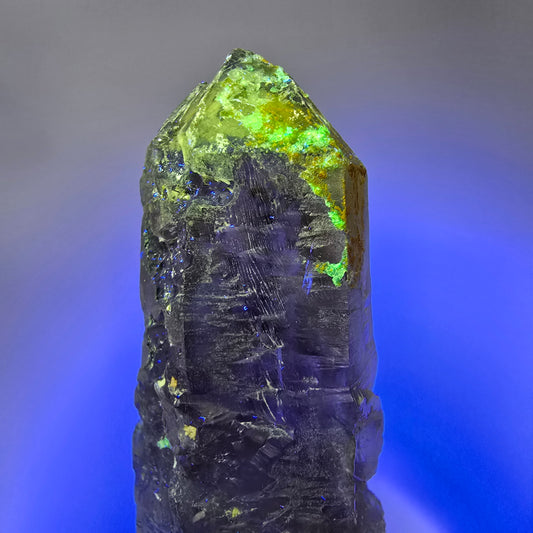
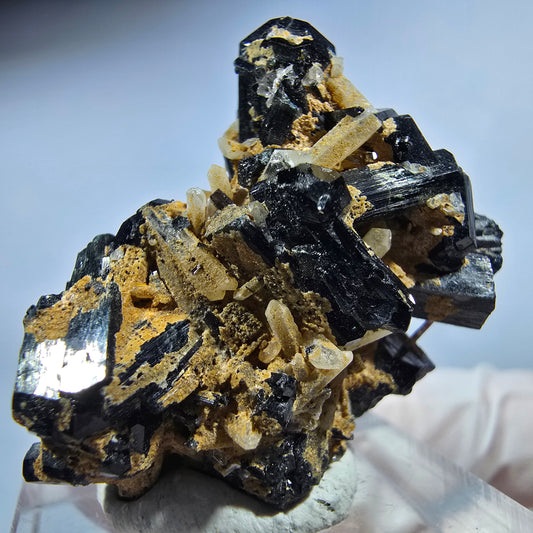
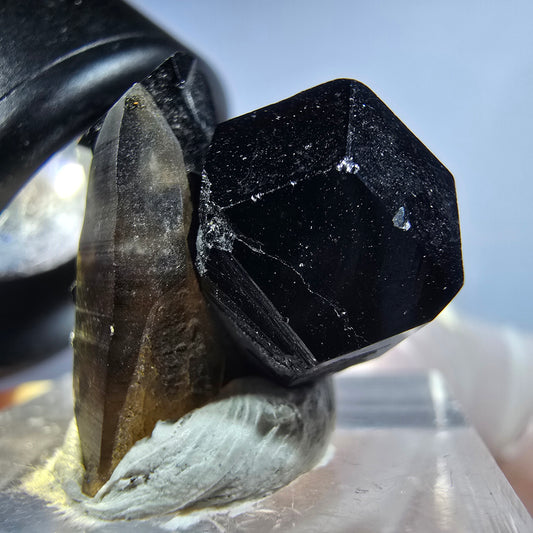
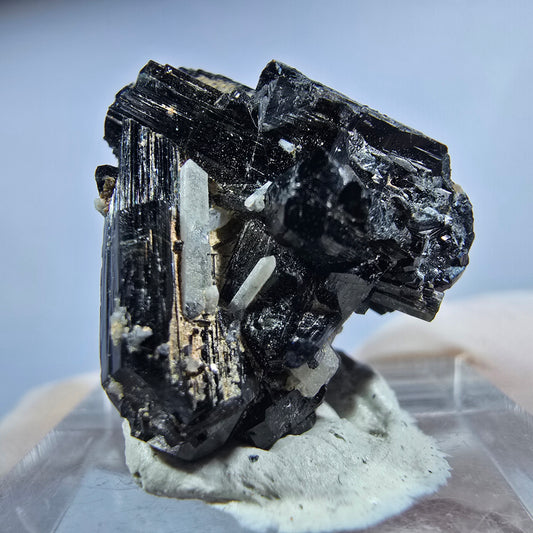
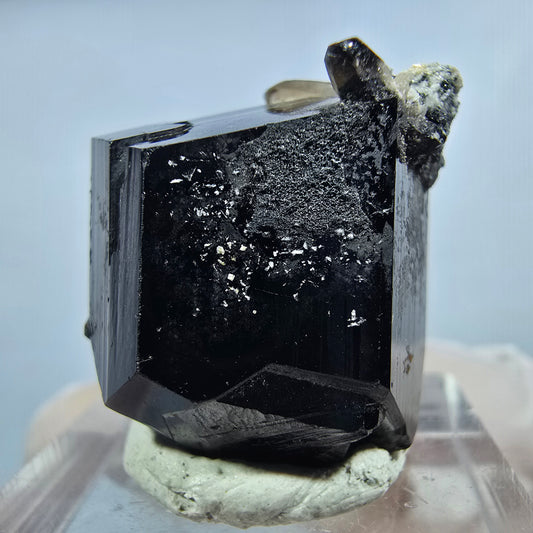
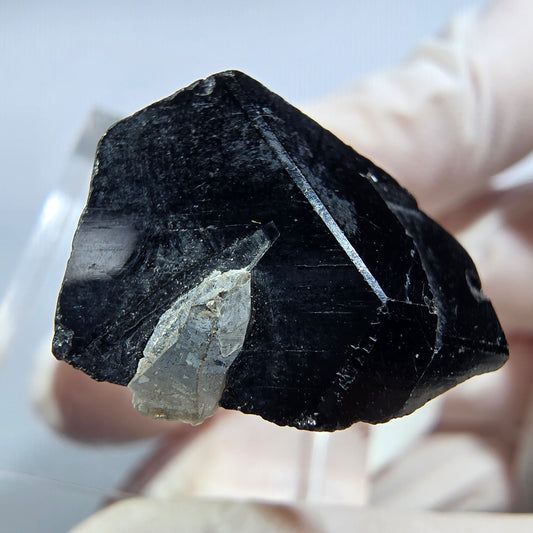
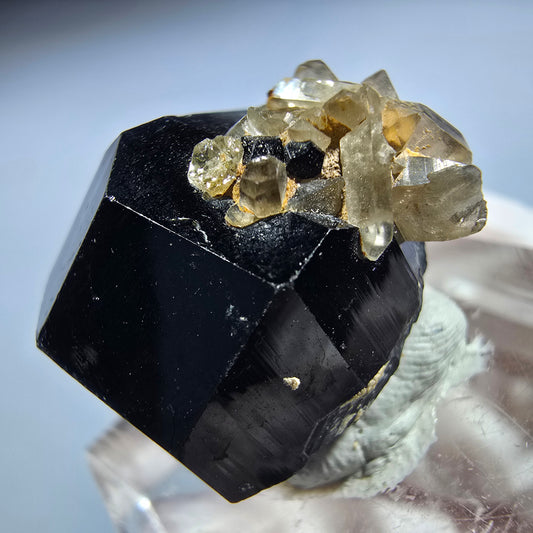
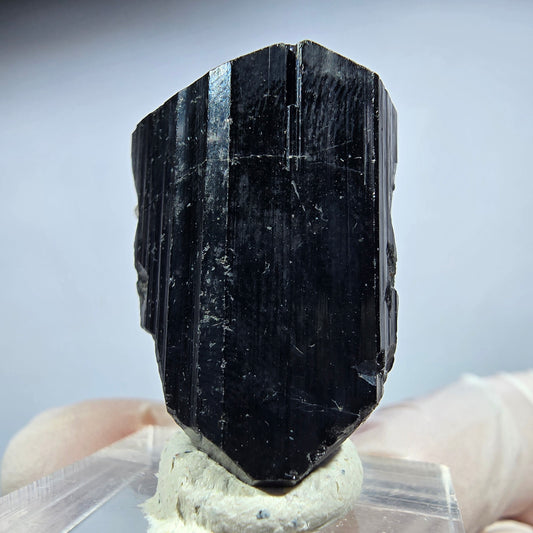
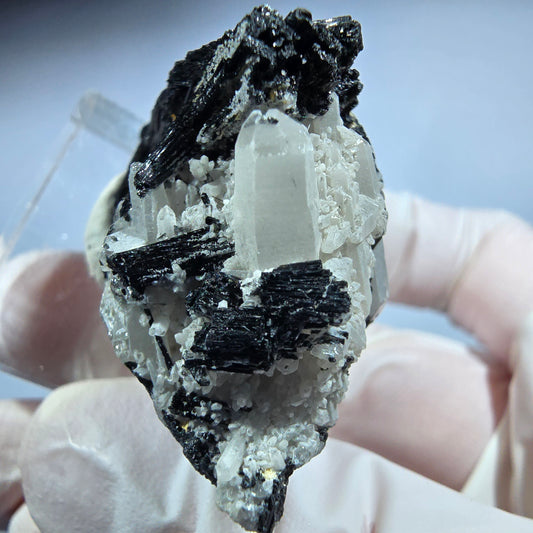
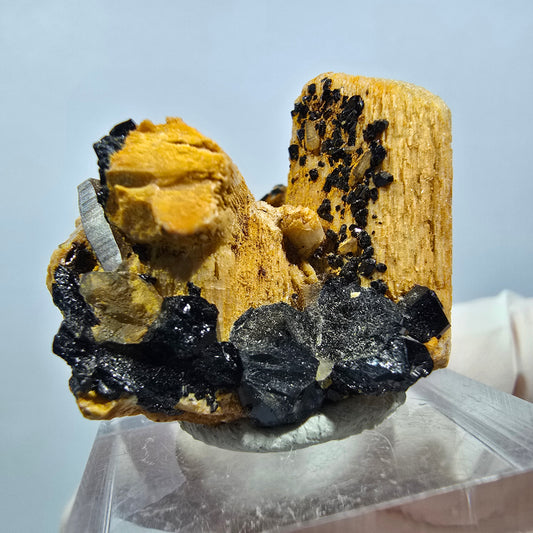
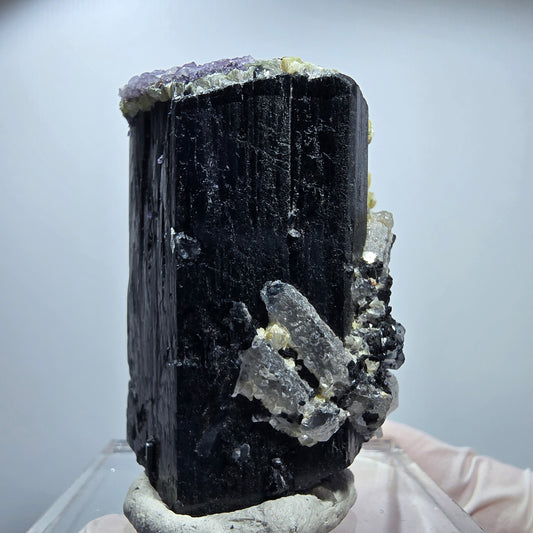
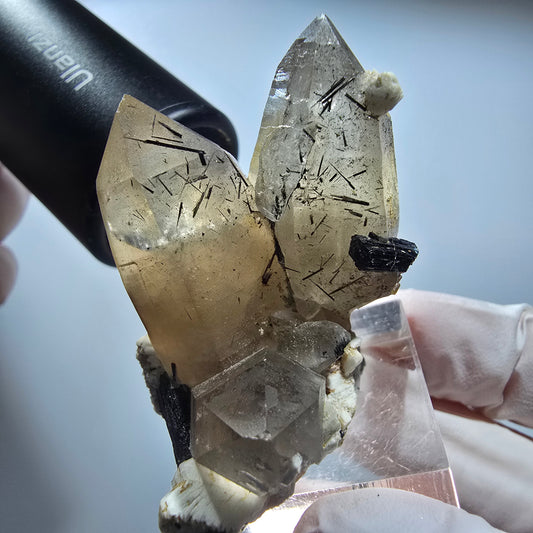
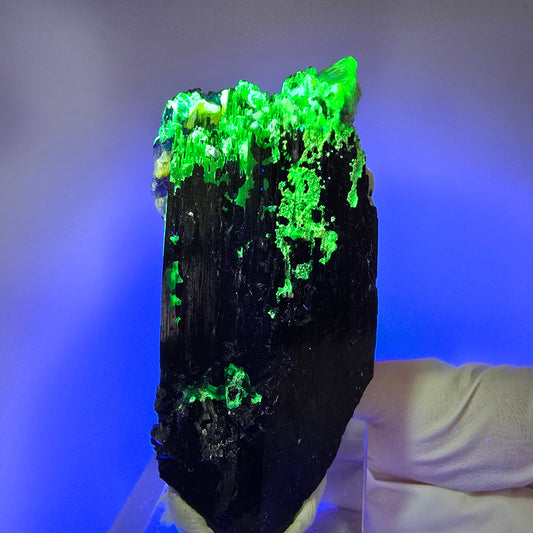
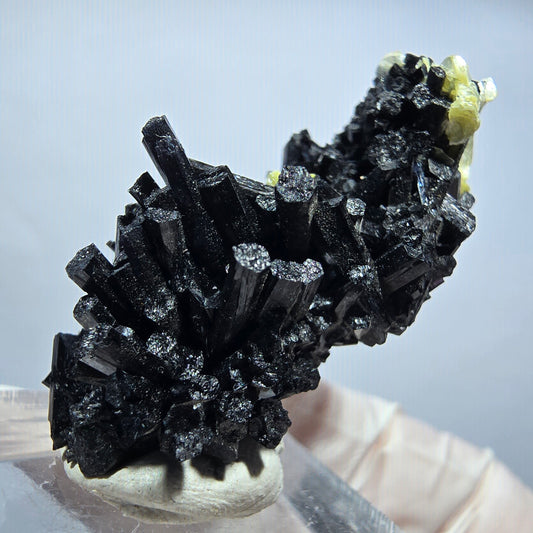
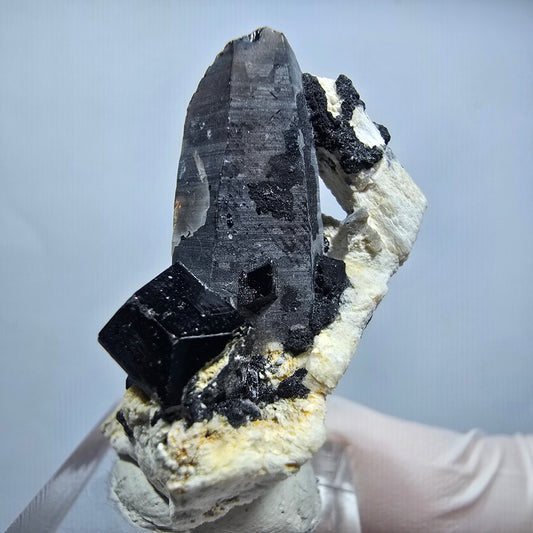
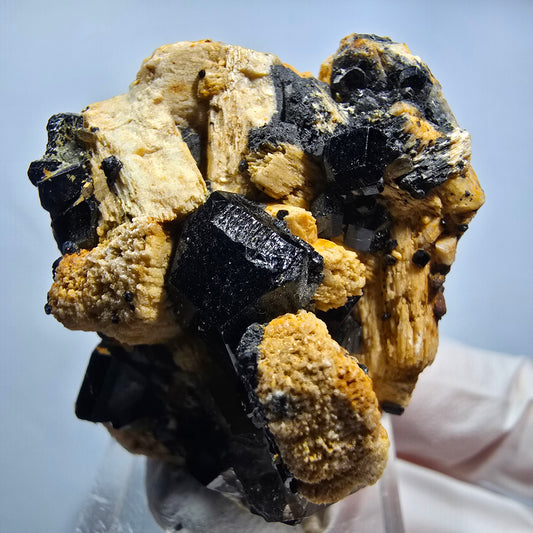
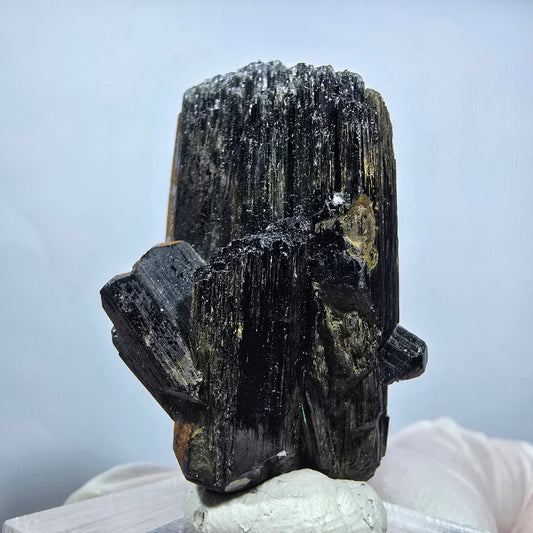
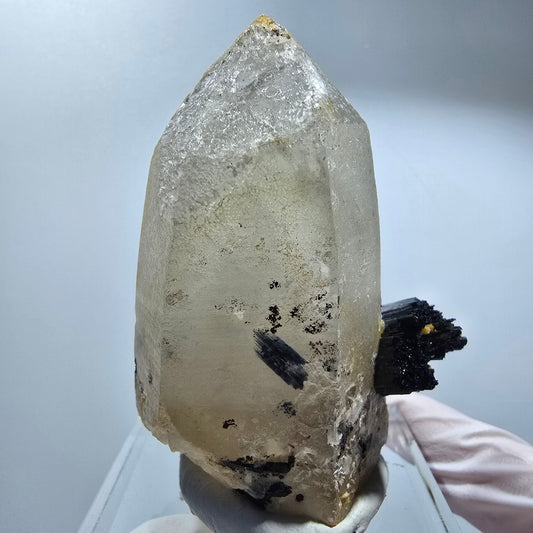
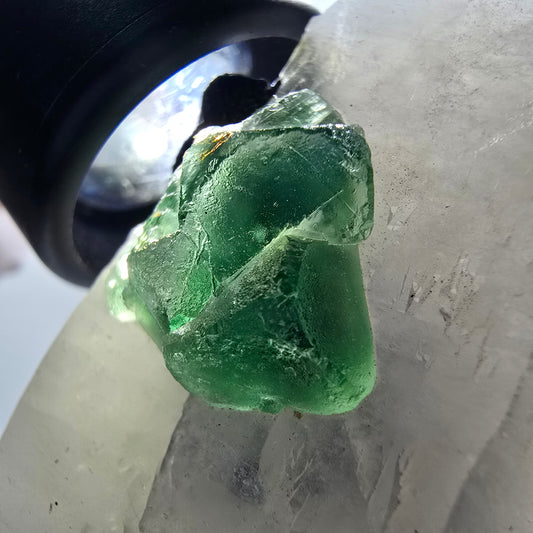
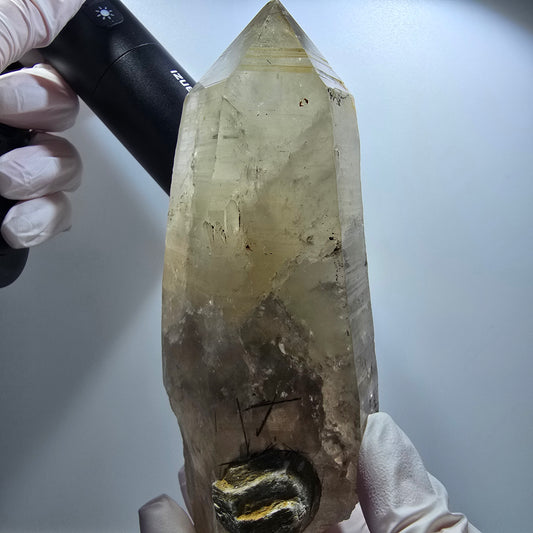
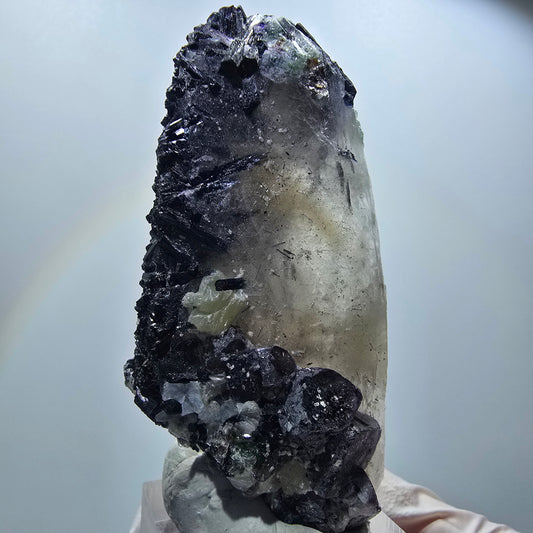
Namibia is a true paradise for mineral collectors and gemstone enthusiasts. Among the country's many fascinating treasures, the tourmaline quartz stands out. It captivates with its unique intergrowths of black schorl tourmaline , often resembling delicate ink drawings in crystalline form. These rare specimens are frequently found in the renowned Erongo region and are absolute masterpieces, both aesthetically and geologically.
What are tourmaline quartz crystals?
Tourmaline quartz crystals are quartz crystals that have become intergrown with black schorl during their growth. Schorl is the iron-rich variety of tourmaline and is characterized by its deep black color and distinctive prismatic crystal structure. Nature displays an impressive diversity of forms: from the finest needles to elongated rods and spectacular, star-shaped intergrowths. In Namibia, we find these combinations in various forms:
Smoky quartz: These pieces display an elegant smoky-brown coloration that forms a mysterious contrast to the deep black tourmaline inclusions.
Rock crystal: The clear and transparent form of the quartz makes the black accents of the schorl stand out particularly brilliantly and three-dimensionally.
Phantom quartz: A true rarity, where the tourmaline inclusions often mark the old growth layers (phantoms) of the quartz.
Amethyst: In the violet variety, the black schorl provides an exceptional depth of color and makes each piece an exclusive collector's item.
Important sites in Namibia
Namibia is considered one of the world's best sources of high-quality tourmaline quartz. Each deposit has its own unique characteristics:
Erongo Mountains: This area is famous for its pegmatite deposits. The sought-after star-shaped intergrowths of schorl in crystal-clear quartz crystals are particularly common here.
Goboboseb Mountains: Known for their legendary amethysts and smoky quartz, this region often yields pieces with particularly aesthetically placed tourmaline needles.
Valentine Pocket & Streep Mine: These mines specialize in extremely clear crystals, in which the black tourmaline rods appear almost to float.
The origin: A complex interplay
The formation of these quartz crystals is a geological masterpiece that progresses through several phases. First, pegmatites rich in boron, iron, and aluminum form deep within the Earth's crust. In the subsequent hydrothermal phase, hot solutions circulate through fissures in the rock, transporting these essential elements. During cooling, quartz and schorl-tourmaline crystallize simultaneously or sequentially, with the tourmaline often being directly embedded within the growing quartz faces. The result is harmonious intergrowths , distinguished by their hard, vitreous luster and the metallic sheen of the tourmaline.
Care and energetic significance
With a Mohs hardness of 7 (quartz) to 7.5 (schorl), these crystals are very robust. However, to preserve their brilliance permanently, you should keep a few points in mind:
Cleaning: Regularly clean your crystals carefully with lukewarm water and a soft brush to remove dust from the fine structures.
Light protection: Avoid prolonged, extreme sun exposure so that the smoky or violet hues of the quartz retain their full intensity.
Storage: It is best to store the pieces individually or padded to protect the often fine, needle-like points of the tourmaline from mechanical damage.
Besides their visual appeal, tourmaline quartz is also valued as a powerful protective stone . It is considered a symbol of grounding and inner stability, helping to release emotional blockages and strengthen the root chakra.
Discover our selection of tourmaline quartz now and secure your hand-picked piece of Namibian geological history!