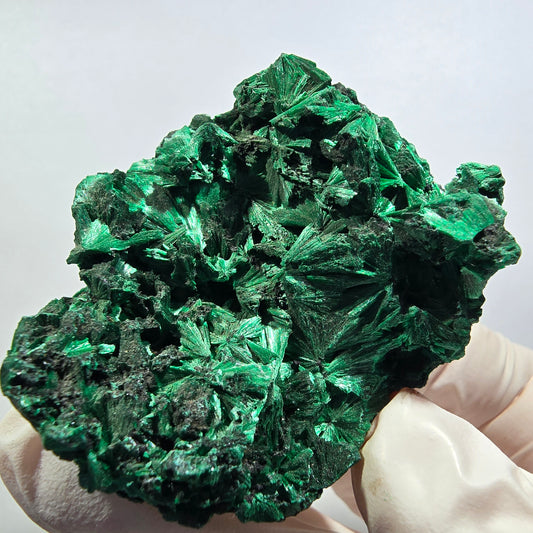
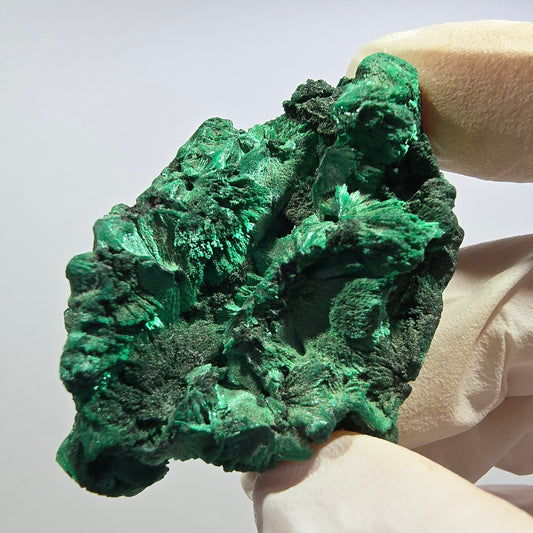
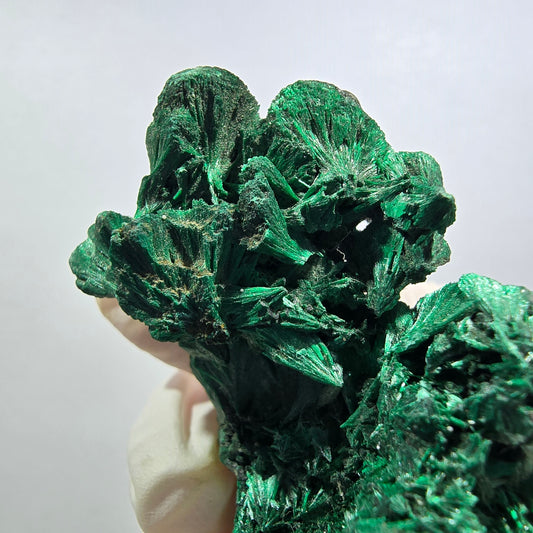
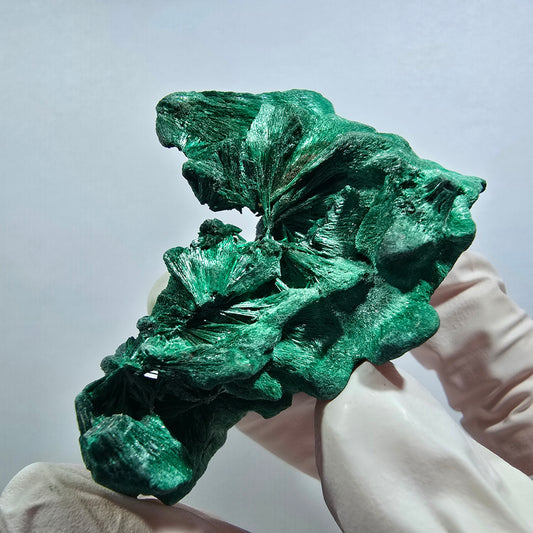
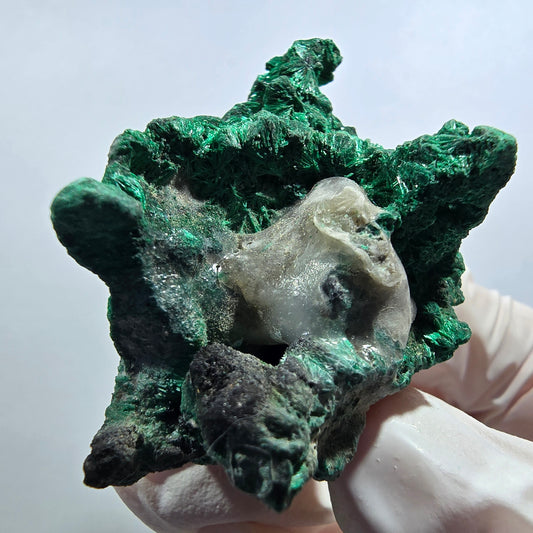
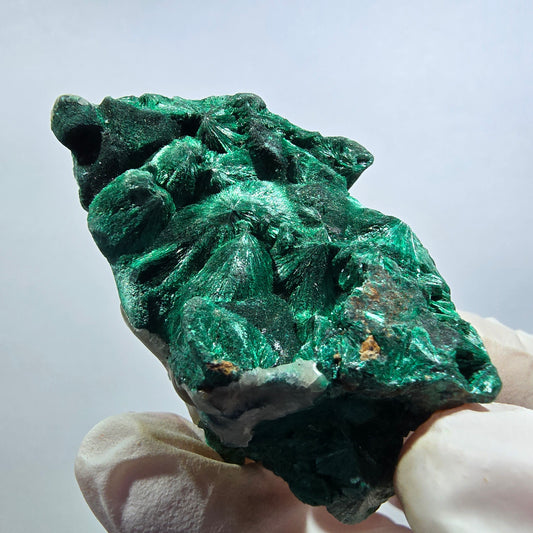
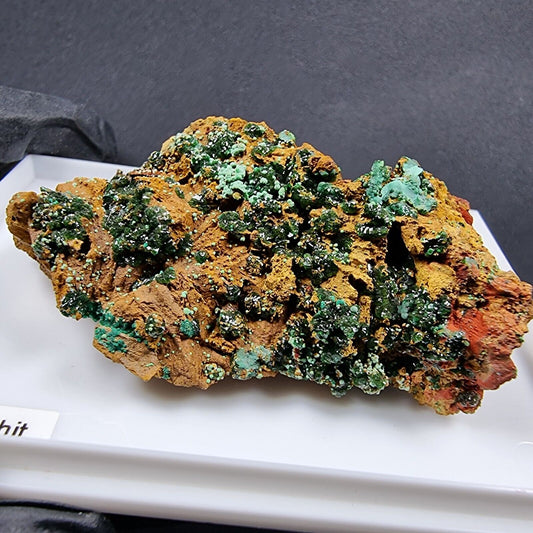
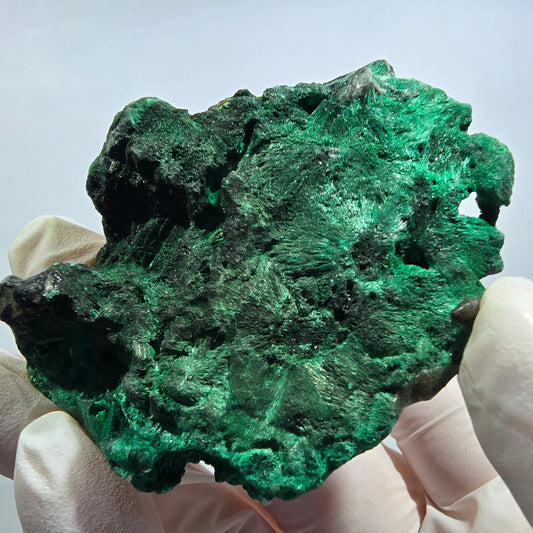
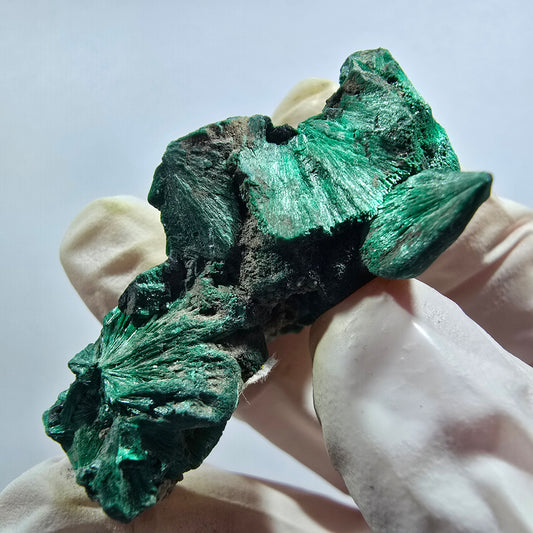
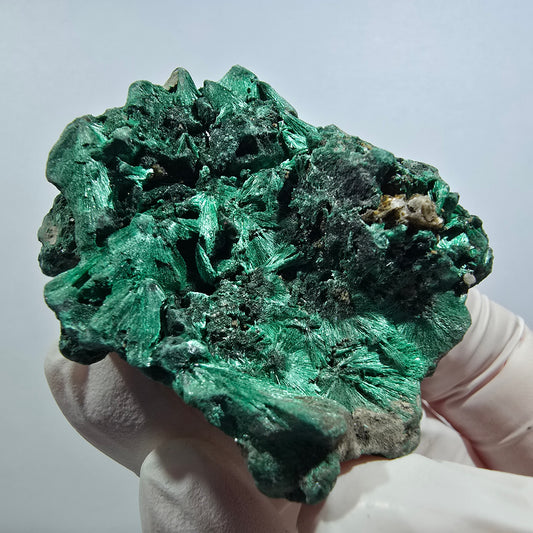
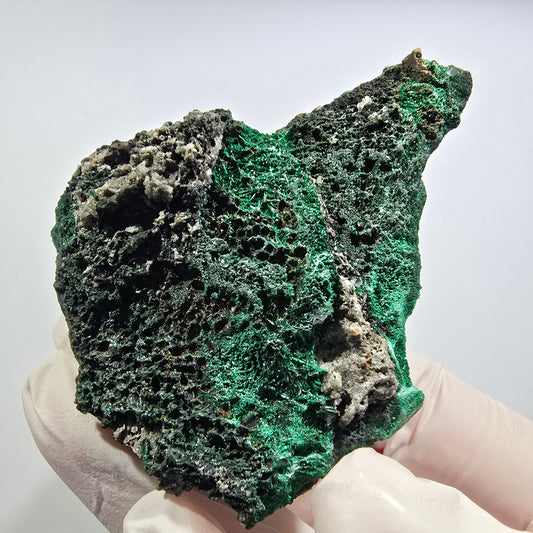
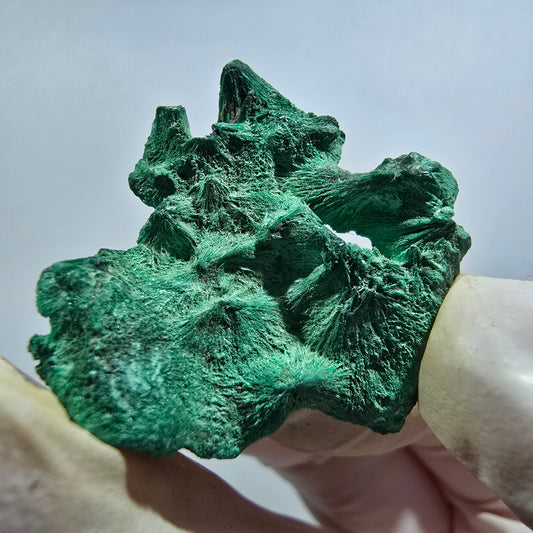
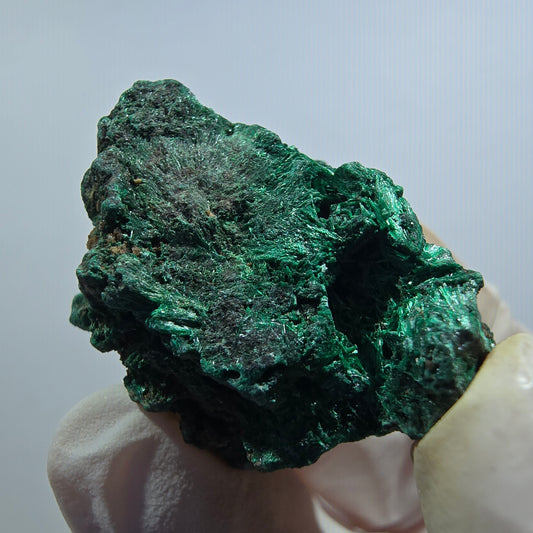
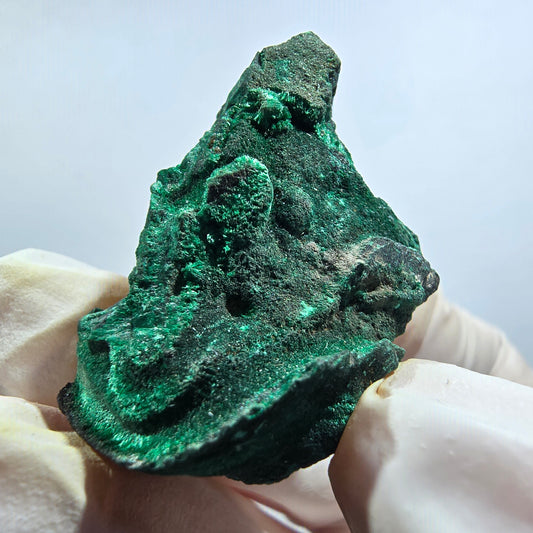
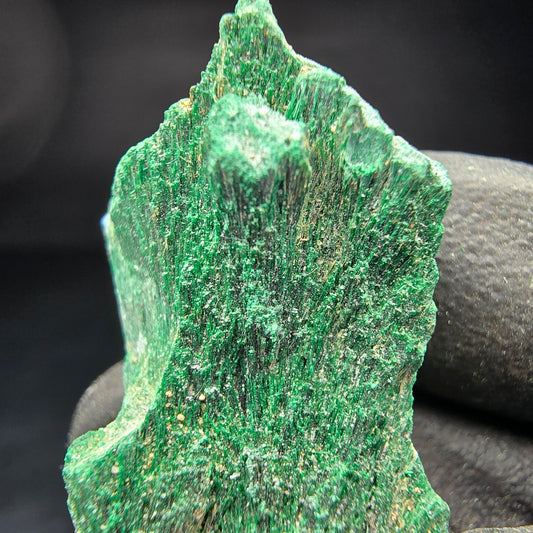
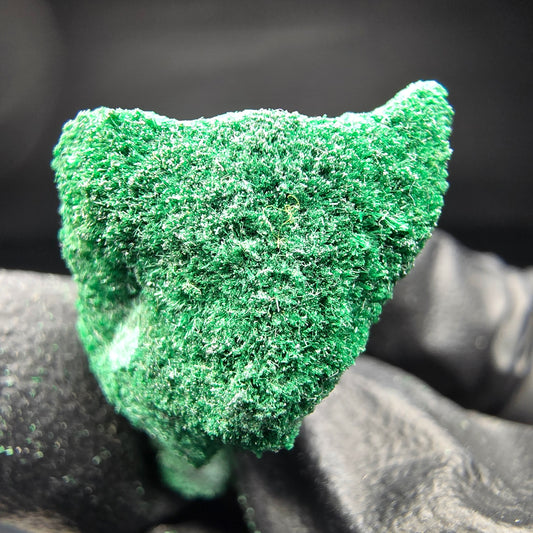
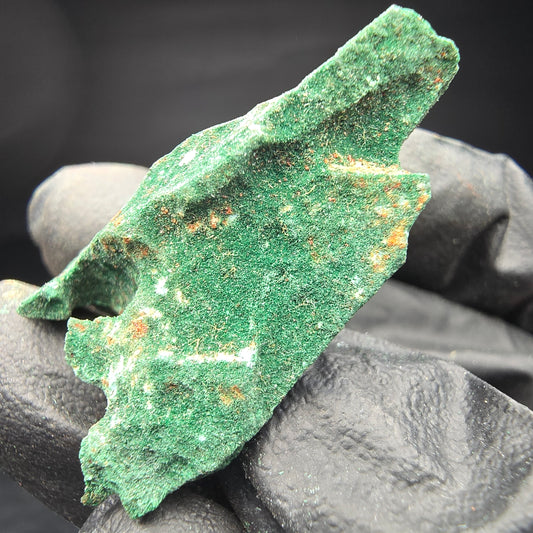
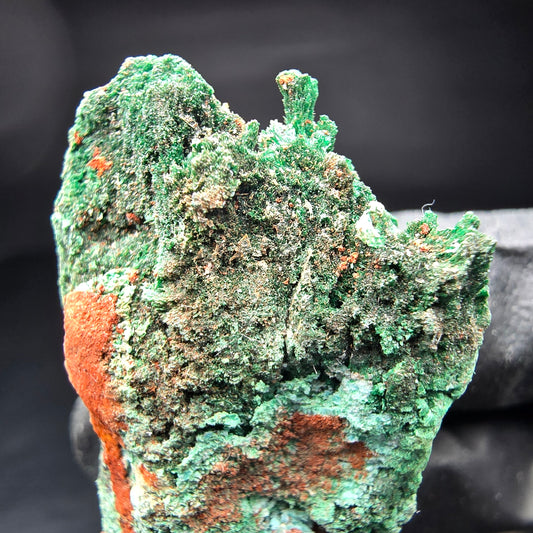
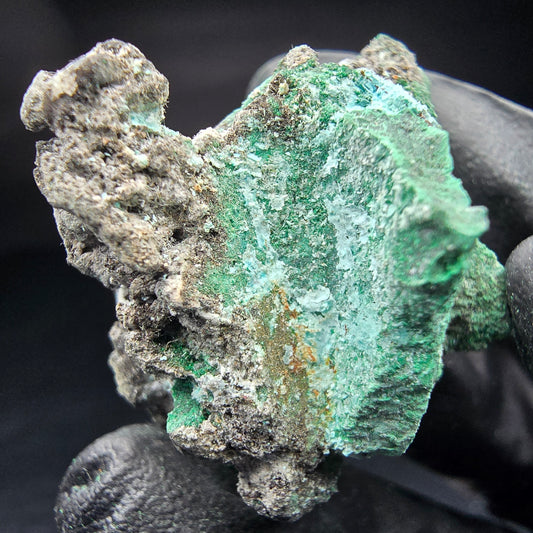
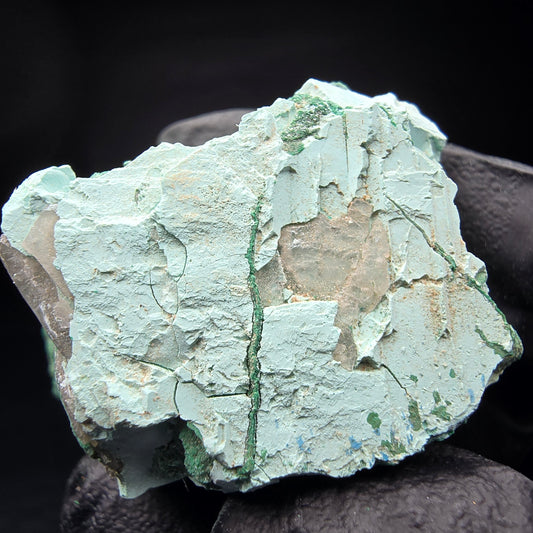
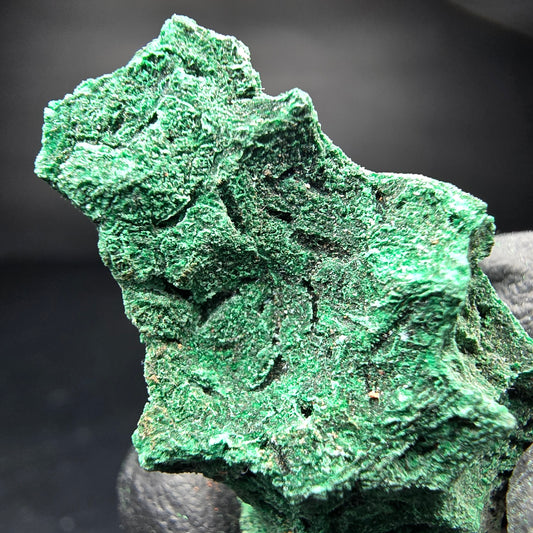
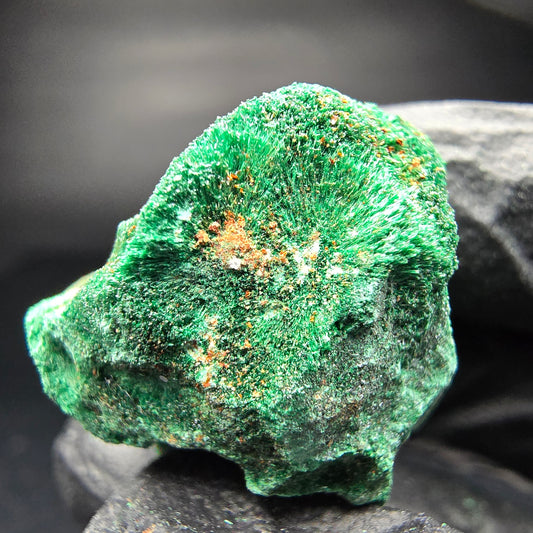
Welcome to the fascinating world of copper minerals! Today we'd like to introduce you to a timeless classic that captivates with its vibrant green hues and mesmerizing patterns: malachite from the Kaokoveld region of Namibia. This mineral is not only a visual highlight but also a true piece of natural history that no discerning collection should be without.
What makes malachite so special?
The name "malachite" derives from the Greek word "malache," meaning "mallow"—a fitting reference to the deep green color of mallow leaves. As a copper carbonate, malachite typically forms in the oxidation zone of copper deposits. In Namibia, it reaches a quality that delights collectors worldwide. Here are its key characteristics:
-
Color spectrum: The palette ranges from a delicate light green to a deep, almost black emerald green. The intensity of the colors makes it one of the most striking minerals of all.
-
Banding: The hallmark of malachite is its characteristic banding. This often forms concentric circles, "eyes," or wave-like patterns, making each piece absolutely unique.
-
Chemical nature: With the formula $Cu_2(CO_3)(OH)_2$, it is a classic secondary mineral that stores the power of copper in crystalline form.
Source location Kaokoveld: Quality from the wilderness
While malachite is found worldwide, specimens from the Kaokoveld in northwestern Namibia enjoy an excellent reputation. The region is known for its pristine nature and rich mineral diversity. Finds there are often characterized by particularly dense structures and exceptionally clear banding.
Fascinating growth forms
In nature, malachite rarely occurs in the form of large single crystals. Much more interesting are its organic-looking aggregates, which form through the slow deposition of mineral-rich solutions in cavities:
Botryoidal forms: These grape-shaped or spherical surfaces look almost like soft moss or solidified blisters and give the stone a sculptural appearance.
Stalactite structures: In some geodes, the malachite grows in cone-like shapes which, when cut open, reveal the famous eye pattern.
Care and protection of your malachite treasures
Due to its relative softness – it has a Mohs hardness of about 3.5 to 4 – malachite requires a little more care than, for example, a hard quartz. To preserve its natural luster and color, you should observe the following points:
-
Sensitivity: Malachite is sensitive to acids, harsh cleaning agents, and high heat. Use only a soft cloth and lukewarm water for cleaning.
-
Storage: It is best to store your malachite pieces separately from harder gemstones to avoid scratches on the polished or natural surface.
-
Handling: Since malachite is a copper mineral, it should not come into contact with food after handling (especially in its raw form) – a quick hand wash after inspecting your treasures is always a good idea.
Whether as a polished collector's item, as a natural specimen or as an energetic eye-catcher for your home – the malachite from the Kaokoveld is guaranteed to attract attention.
Discover the emerald green magic of malachite now and secure your hand-picked unique piece at Mineralodo!